Glen Charlock
Inherent ViceGlen Charlock is a former Aryan Brotherhood inmate who works as a bodyguard for developer Mickey Wolfmann before being killed in the masked attack at Channel View Estates. The case that begins with a request to find him becomes a tangled investigation into prison loyalties, a planned abduction, and an arms deal; Glen’s death is central to the mystery, but the surviving evidence never identifies his killer with certainty.
Identity and Background
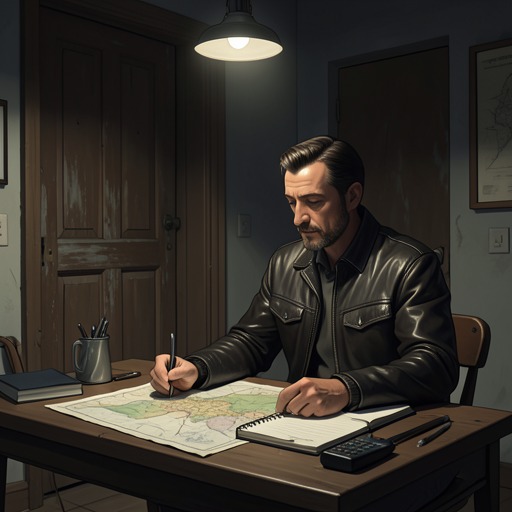
Tariq Khalil approaches Doc Sportello because a former prison associate owes him a large sum of money. Bound by an oath not to explain the business, Tariq gives Doc only the man’s name: Glen Charlock. He says Glen is now outside prison and working as a bodyguard for a builder named Wolfmann. Tariq’s way of speaking about Glen suggests a personal wound beneath the debt, although the nature of their bond is not yet clear.
Glen’s prison history connects him to the Aryan Brotherhood and to Tariq’s circle. Tariq later explains that Glen wanted Brotherhood membership but did not want to kill someone himself. He feared that a failed attempt could leave him dead, imprisoned indefinitely, or sent to San Quentin. Yet the Brotherhood was pressing him to complete the initiation, and he wanted more than anything to get outside. His position was therefore divided from the start: he sought belonging and a way out, while trying to avoid the violence demanded as the price of both.
The Prison Killing and Its Aftermath
The circumstances around El Huevoncito’s death help explain Glen’s standing among the inmates. El Huevoncito was a widely hated informant whose actions had harmed prisoners across racial and gang lines. Because the rival Chicano factions Nuestra Familia and Sureños could not readily carry out the killing themselves, the job was passed to the Aryan Brothers, who were recruiting Glen. Glen, unwilling to kill El Huevoncito directly, sought a way to subcontract the act and claim credit without bearing the same risk of retaliation.
El Huevoncito was eventually found dead after an early-morning shake-and-bake on Tariq’s block. Tariq had a solid alibi, as did Glen, and the killing was never traced to Tariq. Glen asked fellow inmates to help dispose of a mess-hall shank that he had marked with some of his own blood; he was accepted into the Aryan Brotherhood and, after Tariq’s release, also left prison. Mickey Wolfmann then offered him a job. The account establishes that Glen arranged the killing indirectly, but it does not specify who carried it out.
Tariq’s earlier account of the debt acquires a wider context when he explains that his people, the Warriors Against the Man Black Armed Militia, had commissioned the small-arms portion of a deal involving Glen. The logistical arrangements took time, and the group grew uneasy while waiting for Glen to set things up. Tariq’s visit to Doc is part of that effort to locate him, not simply an attempt to collect a private debt.
The Raid and Conflicting Explanations
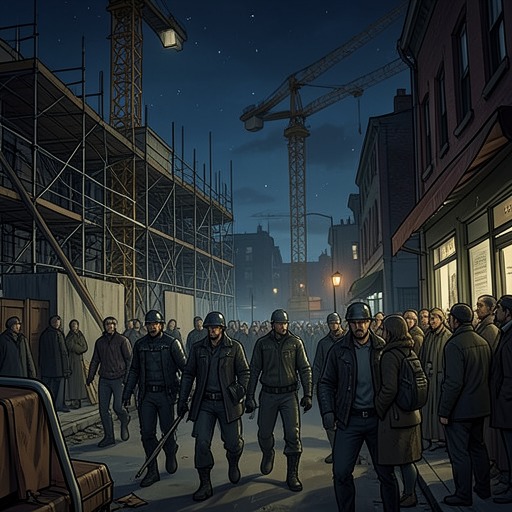
Glen is killed during the attack at Channel View Estates. Film of the assault shows him unarmed, moving in a crouch as a masked gunman shoots him. The footage makes his fear visible, but does not reveal the shooter’s identity. Later, photographs enlarged from the film still offer no readable face: the gunman could be Art Tweedle beneath a ski mask, or someone else. The visual record confirms Glen’s death while withholding the answer the investigation seeks.
Clancy Charlock, Glen’s sister, wants to know who killed him, despite describing him as a man whose life was likely to end badly. She rejects the police theory that Glen died while trying to stop Wolfmann’s abduction. In her account, Glen was more likely to have participated in a kidnapping than to have risked himself to prevent one; when genuine trouble came, she says, his instinct was to flee.
Boris Spivey offers a different account of the raid’s mechanics. Glen was not supposed to be on duty when the attackers came for Wolfmann. Puck Beaverton had been assigned to let the attackers in and then disappear, but changed shifts with Glen at the last minute without telling him what was planned. Puck’s withdrawal placed Glen in the position he had been meant to avoid. This explanation presents his death as the consequence of a betrayal and a failed plan, rather than a deliberate choice to protect Wolfmann.
Later, Puck tells Doc that Glen was the target all along. According to Puck, the organization for which Glen was running guns had stopped trusting him, just as the Brotherhood had condemned him as a traitor to his race. Puck also says that he warned Glen shortly before the attack. Glen nevertheless stayed, insisting that it was his duty to protect Wolfmann. The explanation deepens the sense that Glen was caught between hostile groups, but it does not reconcile every earlier account or identify the masked shooter.
Loyalties, Regret, and the Unresolved Case
Puck’s confession establishes that his relationship with Glen was more than a shift arrangement. He says they had once been close companions, had each endured punishment on the other’s behalf, and had shared a history of mutual loyalty. He admits that he later helped set Glen up, then says that he owed Glen at least a warning. Puck’s regret does not erase his part in the betrayal; it makes the cost of that betrayal personal as well as tactical.
Doc and Puck also speak of guilt in terms that extend beyond the events at Channel View. Puck wonders whether he could have saved Mickey from whatever happened to him, and perhaps Glen as well. He calls Glen a failure but remembers him as a blood brother, while recognizing that a different shift assignment might have put Puck in Glen’s place. The exchange leaves responsibility unresolved: Puck’s choices mattered, yet Doc is told that no one could have saved the people caught in the larger events.
The investigation repeatedly approaches a clear answer and then loses it. Reports connect Glen to the proposed abduction of Wolfmann; Clancy doubts that he was acting as a protector; Boris describes an uninformed change of shifts; and Puck later says that Glen was the intended target of the gunmen. Tariq’s account adds the separate arms arrangement, while the prison history establishes another killing in Glen’s past. Together these accounts make Glen’s vulnerability intelligible without producing a single, verified explanation of his death.
Narrative Significance
Glen’s death is the point at which Doc’s investigation brings together the prison economy, the arms deal, Wolfmann’s disappearance, and the covert violence surrounding Channel View Estates. Glen is not presented as an uncomplicated victim: he arranged a killing indirectly, sought status in a violent organization, and became involved in gunrunning. Yet the same evidence shows him caught among competing loyalties and exposed to forces that used him, distrusted him, and ultimately left him dead.
The film of the raid and its unreadable enlargements give the mystery a material limit. Doc can return to the images, study them, and search for a face, but the record will not yield a decisive identification. Glen’s story therefore ends with a confirmed death and a persistent uncertainty: the motives surrounding the attack become more legible, while the individual responsible remains obscured.